Interview with The Insurance Fraud Experts
December 17, 2025
Contributing Authors: Emily Epps and LJ Teske
For International Fraud Awareness Week, we took the opportunity to sit down with Merge Investigations’ fraud experts, Chris Will and Sue Fernandez. Chris has been Merge’s Director of SIU since 2018, joining us to continue a 30-year career in SIU compliance and investigations. He’s been developing fantastic anti-fraud training materials and managing nationwide SIU reporting programs since 1998, and before that, he was directing claims investigation teams in the field. Sue is our SIU & Compliance Manager, reaching her 10-year anniversary with us this year. She’s previously worked as an insurance adjuster, field investigator, and desktop SIU investigator, and has extensive experience with corporate training, depositions, and court hearings. She holds a Senior Claim Law Associate (SCLA) designation from the American Educational Institute (AEI), which marks the maximum level of achievement attainable from that organization.
What is the SIU Department?
Chris Will: Well, SIU, for people who don’t know what those letters mean, it’s Special Investigations Unit. In its most basic form, SIU would be the department that’s charged with investigating fraud, determining if there is potential fraud in a case, then working that case and providing it to the appropriate Department of Insurance or law enforcement for a referral for criminal prosecution. We work with that law enforcement or Department to determine if the suspected or potential fraud is indeed fraud. Then, if there is a prosecution, we work with them until that prosecution is over, and then hopefully collect restitution for our clients.
What types of fraud do you investigate?
Chris Will: Most frequently, we will get workers’ compensation cases, property cases, and liability cases to investigate, but we investigate all types of fraud. Then there are various types of fraud present within those different lines of business.
Sue Fernandez: A lot of it hinges on what kind of clients we’re getting and what kind of business we’re writing, because [it] used to be – I did workers’ comp on all my cases, right? I really didn’t do auto, home, or anything like that. And honestly, I loved it. We have a lot of roofing claims right now because that is what our client base needs. Right now, we get a lot of background investigations that can lead to SIU from auto accidents.
Where do the cases you work come from?
Chris Will: Usually, we will get a case when either the adjuster or someone else in the claims process has identified some red flags in the claim, or some suspicions that there may be potential fraud occurring, and they will refer that to the SIU. We’ll get that usually from an adjuster or other claims personnel, and sometimes it comes out of investigations as well. For example, surveillance, where a claimant is potentially performing all sorts of activities, and they had previously stated to a doctor or claims adjuster, or someone else, that they can’t perform these activities. They say that they just basically stay inside all day, and they can’t do anything. But we got them mowing the grass, working on their roof, or working another job – those types of things.
Sue Fernandez: When the surveillance is done, and [the adjuster] will tell the surveillance investigator, “this guy said he can’t drive.” That’s an easy one. He can’t drive, but the surveillance investigator documented him driving everywhere. Now that’s probably going to come to SIU. And that’s where we have to determine what’s what. And it’s all a puzzle. I mean, it is literally a puzzle where it’s like, “OK, we’ve got this, this, and this, but we’re still missing a piece.” That can be frustrating because we still have to prove it.
A lot of times, adjusters will refer cases a year and a half later, and we’ll say, “why didn’t you refer it earlier when you had evidence?” And they’ll say they couldn’t prove it at that point, and “that’s not their job.”
If they find the red flags, which they are taught about during our trainings, then it should be reported to SIU immediately.
Chris Will: Yes, because SIU can assist early on. We can start the investigation, and we can make recommendations. Maybe surveillance, a background check, a social media investigation, or if it would be wise to get a recorded statement. It’s always best to get SIU involved as soon as red flags are identified.
What is Anti-Fraud Training?
Chris Will: The training is to make sure that we educate our clients about what exactly is insurance fraud. We provide definitions of fraud, the state statutes in the states that they handle, the requirements for them, identifying and referring fraud to the SIU, how to report fraud, and what their duties are. We provide a number of red flags as well for the various lines of business that they handle, and we make sure that those lines of business or red flags are specific to their organization.
Sue Fernandez: A very important part that Chris said – you would think fraud is fraud, right? But a roofing claim piece of fraud, versus a self-storage, versus a workers’ comp, they all have very different red flags. In workers’ comp, a red flag could be that the employee knew they were about to get fired, or that they were on their last write-up. But with roof damage, we will have specialists inspect the damage and they can tell when it’s man-made.
Chris Will: We will also provide the state statutes that are specific to the states in which they operate to let them know the requirements. The states can enforce harsh penalties for not reporting fraud, so that is also something we cover during our trainings.
Who is recommended to receive the training?
Chris Will: As far as who’s required to take the training, we generally go by California standards because California is one of the strictest states in the country. If you adhere to all the California regulations and statutes, you’re generally going to be compliant no matter where you work. California requires, what they call, “Integral Anti-Fraud Personnel” to take the training. And those are people involved in the claims process, which includes claims adjusters, underwriters, legal professionals, even call center staff. Basically, anybody who touches a claim should take the training.
So if a call comes in, the call center staff takes information over the phone and says, “OK, when did the claim happen? What’s your name? Give me some specifics.” And then they are responsible for forwarding it on to, say, an adjuster, or another member of staff – they should take the training. Anybody that works with a claim in any way really should take the training.
Now, we have some clients who will require every person in their organization to take the training. They want everyone to be educated and aware. There’s no harm in that at all, of course, but some of those employees may not be required to take it. But like I said, training should be extended to anyone involved in the claims process from the very beginning to the very end. Even legal staff should take the training as well.
Why can’t the adjuster investigate the fraud themselves?
Sue Fernandez: One, they have so very many claims to handle, and two, they have to keep any thoughts of potential fraud separate from handling the claim. They can’t say, “oh well, I think this person isn’t telling the truth. I’m not going to pay their benefits, or I’m not going to pay to repair their roof.”
They need a separate entity, which is the SIU, to evaluate that and determine if that fraud appears to exist.
Chris Will: Yes. And Sue made a good point on that. The adjuster, and their investigation, and the SIU investigation – we always say they run side-by-side. The adjuster shouldn’t be making claim determinations based on, “oh, I need to wait and see what SIU comes up with to make my claim determination.” They have to basically work their claim while we’re working our investigation. So they run side by side, and our investigation has to be pretty much – well, I don’t know if I would say independent –
Sue Fernandez: Parallel. That’s the word we like to use.
Chris Will: Parallel. Right, exactly.
Sue Fernandez: I think the biggest misconception is that, if you think it’s fraud, you can stop the benefits, or you don’t pay the claim. And that’s not true. The adjuster still has to follow the rules and regulations of that state until the fraud is proven, or sometimes maddeningly, they have to settle the claim even though we know we’re so close to prosecuting fraud because they can’t say, “oh well, you know what, we know it’s fraud, so we’re not going to settle it.”
I’ve had a couple of attorneys who will think, “OK, we’re going to tell them that we’re going to report them for fraud if they don’t settle for X amount.” But you can’t do that. You can’t use fraud as a threat on the settlement. So that’s another misconception, is that people think an adjuster can look at it, say it’s fraud, and shut down the claim. But they can’t.
How can you prove that it’s actually fraud?
Sue Fernandez: We can think all day long that it’s fraud. Frankly, we can know that it’s fraud. But we can’t prove that if there’s not a deliberate lie.
That’s one of the things that will stop that case from moving forward. And so, we love to get them on a recorded statement, and I’ll flat out ask them:
“Did you take these photographs?”
“Yes.”
“Did you take them the day of the loss?”
“As soon as the manager told me about it.”
“So you didn’t get them anywhere else. Did they go onto your computer?”
“Nope. I took them on my phone…”
OK, well, there you go. So you have to have that lie, and you have to have that before they can be criminally charged. Because, if you think about it, the balance is different, right? It’s beyond a reasonable doubt versus a preponderance of the evidence. So, that can make it a little frustrating.
Do you think fraud is increasing in frequency?
Sue Fernandez: I think it is going to continue to increase. When the economy is bad, it increases because people need money. Sometimes, they don’t make their claim intending to commit fraud. Some family member might say something, or somebody else tells them, “oh, I got X amount of money when I filed my claim.” So, when the economy is not good, fraud rises. And AI is going to make it easier for fraudsters in some ways, but in other ways it’ll make it a little more difficult, because insurance companies now have tools and analytics. For example, when the claim is filed, insurance carriers will be notified if someone has filed 10 prior claims.
In my opinion, it’s also going to increase because companies are also trying to do more with less people. You have adjusters who already had pretty high caseloads. Now you’re asking them to do more, which means they can’t look at it as intensely.
Chris Will: Comp cases, in particular, get really involved. And adjusters were supposed to have no more than 100 files at a time. The workload on the adjusters has really, really increased. So, you know, they don’t have the time to look at and investigate the claims like they used to.
What are some recent trends from fraudsters?
AI and Deepfakes
Sue Fernandez: With AI coming, that’s making huge changes in the industry, I would say, and Chris would probably agree, AI will probably be the most change that we’re going to see. People, or bad actors, are findings ways to go against the system by using AI. And I learned at a conference one time that people who do this kind of thing will either talk to each other, or they’ll go on certain website forums and say, “you know what, this insurance company will pay you really quickly. You should go through them. Or they don’t check to see if their invoices are real that we give them, so you should go to them.”
Chris Will: Yes, as Sue mentioned, AI, that’s really something that’s been playing more and more a part, and it will in the future as well. And even just simple things, it is really, really easy, especially like in the property realm of things, it’s really easy to generate fictitious pictures. I just got a Google phone recently and it has a bunch of AI features on it. I was able to just generate pictures of property damage that wasn’t real. I assisted in creating some training, and one of the examples I used – I just put the Pope on a bicycle. He was riding a bicycle! But of course, the Pope wasn’t riding the bicycle. You can just do all sorts of silly things, but you can also do very convincing property damage, like it looks like there’s roof damage, or you know, it looks like it flooded inside of a house. And you could do that really, really easily, unfortunately.

Sue Fernandez: Fraudsters can also use AI technology to alter their voices.
Chris Will: Yeah, and that is pretty scary. They can deep fakes and stuff like that. Basically, you only need maybe 12 or 20 seconds of a person’s voice to generate an entire conversation. We saw a demonstration at a conference where the speaker demonstrated it by having his wife on a brief phone call, and then he played for us what he generated. It’s scary!
Sue Fernandez: It was her voice, like admitting to an accident, saying, “oh my God, I’m so sorry I hit you. Can we not call the police and maybe handle this ourselves?” And he got that from that 12 seconds of her, I don’t know, talking about what they’re having for dinner. And it was very inexpensive, very easy to program. I was blown away.
Chris Will: There is technology as well to help with AI generation. There is metadata you can use in certain circumstances. Now, if the claimant is really smart, they can either erase the metadata or if they send it through e-mail, and since it’s not the original file, then the metadata won’t be included. But the criminals basically come up with one avenue, and then of course we have to come up with other avenues to try to investigate and determine if it’s real or not.
Digitally edited and faked documents
Chris Will: In the last, probably, 60 days, I’ve gotten two cases where both of them had fictitious invoices. They turned in an Airbnb invoice – one that was a really shoddy attempt. They didn’t even copy the logo from Airbnb. They spelled Airbnb wrong. So it was pretty obvious, and there were a number of other indicators as well. We had another case that was a much better attempt – they copied or had copies, somehow, of the letterhead of the business. And so they created a fictitious invoice, but through investigation, we found out that the invoice did not come from the business. They had no record of even providing the services. And so that’s been sent on to the state DOI to investigate.
Sue Fernandez: There’s another one right in the back of my mind that was a pretty good one. It was a plumbing claim and he provided the invoice, and they used all sorts of plumbing terminology. Everything that was written up looked legitimate. I’m like, “OK, this is odd,” but you could tell the phone number had been changed a little. So I started calling around, checking, and checking. I finally found a guy in the area who the claimant used to work for, and so he must have had some old invoices, and changed that number a little bit. It wasn’t a big company, so you could see where a small operator might think, “oh I changed my number,” but this actual plumber said, “oh no, I fired him years ago. He takes advantage of everybody in the city. This guy is scamming you.” And he [the suspect] did end up getting charged.
Reused and stock photos
Chris Will: Sue had a couple of cases where the people submitted pictures that were stock photos off of Google. Right, Sue?
Sue Fernandez: The stories I could tell over the storage claims! It’s become a niche that I did not know I needed in my life, but I did need it in my life because these people will just try so hard to thwart the system, and it’s really frustrating. I had a big one where they hit a bunch of self-storage facilities in Texas. They would rent the unit online, they wouldn’t even go into the facility. They would use pictures they’ve all taken from other ones. They would move one mattress in there. Later, we find out they didn’t even do that – they were that confident they wouldn’t get caught. They would move one mattress into one unit, take photos, and spread that to all of them. I think by the time I was finished putting them all together, it was going to be about $45,000 worth of claims, and these claims are a maximum of $5,000. So, that’s how many times they had done this. And the only reason it was caught was because two managers were at a meeting and realized the claims were related. I think four of those claims got paid before they realized it.
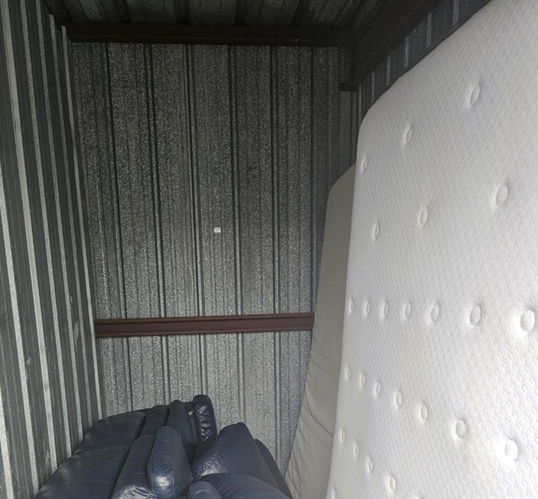
Chris Will: That’s a great point, too. In that case, it was a whole bunch of smaller claims that, in many instances, would just slide under the radar. I mean, a lot of times, adjusters will pay those small claims without too much thought. They put all these small claims in, and like Sue said, it turned out to be $45,000 because there’s like, 8 or 9 small claims that they put in.
Sue Fernandez: And then the other thing is that you’ll get people who lie about the photos they submit. They will say everybody had designer shoes – Gucci, Prada, Dior – everybody did. But then you’ll see all they had in the unit was garbage bags full of stuff. But when we would look at the picture, you couldn’t find it. It’s kind of clever. They wouldn’t go on the first page of a Google match for Dior shoes, they’d go in maybe page 4 or 5. And then they’d copy it. They’d say “oh yeah, here, this is my bag. Look at all these shoes I have!” But if you keep looking on Google, you’ll see the exact same photo they sent in.
Adding to legitimate claims
Chris Will: Sue made a good point earlier. People sometimes don’t intend initially to commit fraud. A lot of fraud will arise from people having a legitimate claim but then they add onto it.
You know, maybe a storm came through and it caused some of their shingles to blow off. “Well, we’ve been having that wet spot on the roof from three years ago that we never fixed. Hey, we’ll put that in too. And you know that old fence back there, it blew down a couple years ago, and we didn’t fix it, we’ll claim that as well.” So they’ll add on to their claim. It started off as an actual real claim with real damages, but they decided to add on some more damage.
Natural disaster and roofing scams
Sue Fernandez: For roofing claims, Florida just had a crazy, crazy amount! They have so many hurricanes. I have one guy that’s literally claiming every screw in his garage for a hurricane, and if you saw this claim, it would make you mad. It really has been the most disheartening because over all the insurance companies, this guy has defrauded – and he’s super aggressive, so they get nervous – he has gotten over $2,000,000 for this house, different claims. It’s not even his house, it’s his mom’s. I kept saying I thought she was dead because nobody has seen her.
And they just kept [paying] because he was so aggressive, right? And so, they’d be like, OK, well, we’ve got to pay because he’s reporting it to the Florida Department of Insurance, right? He’s saying we’re in bad faith.
This guy makes me angry because he’s filed a claim for his driveway, I’d bet at least eight times. And here’s the problem: he gets all that money, and he doesn’t fix the house. It could be a lovely property, but no, he doesn’t fix the house.
And, he posted online that he got a Porsche with the last big settlement that the client gave him. So, he knows how to work the system…and I digress on that one because he drives me nuts.
I made it a point at the last conference I went to, to learn about new topics. I learned that roofers would offer to go up onto a homeowner’s roof to perform a free inspection. But they would take quarters and make little digs with the quarters to look like hail damage. Some will even wear little things on their shoes to simulate weather damage. So they’re up there walking around doing this “free inspection,” but they’re the ones causing the damage. That’s why we have to send an engineer out to look at it.
Florida’s problem was that they didn’t have any laws in place to prevent this, and didn’t anticipate roofers would be so aggressive. Florida started making laws to try to contain that. But quite honestly, it was so blown up at that point. Insurers were leaving the state, so now the problem is in Pennsylvania, Delaware, Maryland.
Another trend that is kind of region-specific, is that these roofers will tell clients they won’t have to pay anything out of pocket at all. They’ll say, “we’ll be able to get you the money from the insurance company.” One, that’s illegal. Two, now they’ve kind of phrased it a little differently, where they’ll say, “all you’ll have to pay is your deductible.”
Are companies doing anything to combat rising fraud?
Sue Fernandez: One client has a roofing unit now, so if the insurance company inspector says, “this looks like it could be man-made damage,” they automatically spend the money to send an engineer. Smart. Yes, it’s some money up front, but you’re getting an expert out there, and they automatically refer it to us. I don’t have to dig deep, but you start seeing the same companies over and over and over. And I know that at least Pennsylvania is starting to look into them because I’ve noticed the last couple of file requests I’ve gotten, they don’t put the homeowner’s name, they put the contractor’s name. And that tells me they’re gathering evidence on particular contractors.
But insurance companies are now realizing they have to start containing it, and they have to start working together because otherwise, it’s raising, and raising, and raising. If they don’t find a way to contain it, they’re going to have to do like they do in Florida. They’re going to have to get out of that state. And then you’ve got big problems. It’s like those storage claims, I try to keep those pretty low-cost because I want them to keep saying, “OK. You know what, this is a benefit. We’re starting to see less.”
But you do feel kind of good when you know you’re allowed to spend a little more on the front end to hopefully pay off in the long run, like these roofing claims, it seems at first like a lot of these won’t go anywhere. But now that I see, oh, they’re looking at this contractor, they’re looking at this contractor, I’m happy to send them on because the more they get, the better it might be.
How many claims get referred to law enforcement?
Chris Will: How many do we refer to law enforcement on a percentage basis?
Sue Fernandez: That’s pretty high because by the time it gets to us, there’s suspected fraud. I would say 80%, probably.
Chris Will: Yeah, I would say about the same. There are some claims that we get that we still have to investigate, that the adjuster has identified the red flags and properly sent them on to us. But after our investigation, we were able to clear the red flags. Those cases still need to be sent because if law enforcement identifies red flags, there still needs to be an investigation. But many times, like Sue said, it’s probably 80% of cases that have the evidence necessary for us to send it to the state.
What are some reasons why law enforcement might not take on a fraud case?
Sue Fernandez: The problem is that law enforcement’s also busy with their own fraud units – it depends on grants. So, every year they write up grants and hope. We’ll even have officers call us and say, “do you have anything?” Because they got a lot of money in grants that year.
But if they don’t, there might be great cases, but they just don’t have the money left. And that is super frustrating. Chris and I realize that this is particularly bad in Florida, between county to county to county.
The state’s attorneys are different as to what they might take and what they might charge. So, you know, we try to package it up really nicely. First, they’ll get our initial referral. If they’re interested, they’ll send us a request, and we will then package it up for them, and we try to do that with a bow. Because think about it, if you have a whole bunch of work and this one’s a mess, you’re going to pick up that one that’s easier to do. I had [an officer] call just the other day, and he had some additional questions. I said, you know what, let me see what I can find out because I don’t want him to say, “this is going to just cause me too much work. I’m going to let this one go.”
Chris Will: Yeah, and like Sue said, initially we send a suspected fraud referral to the state. And if it’s something they want to investigate, they’ll send us a request. And then, like Sue said, we’ll package it up. And what entails is getting the entire claim file from the adjuster, any and all documents, photographs, things like that. We put it in a nice package with an index to everything so they can have everything at their fingertips.
Sue Fernandez: That’s my favorite part, I think, because I feel like that’s when you’re putting the puzzle together. You can see dates, and all of the exhibits, and they all tie together. I think that’s why it’s my favorite part. It goes back to the days of literal binders that would have to be put together, and we’d have to go down and copy them, or put the files on a DVD. But now everybody wants it emailed, which is much easier.
The other thing where I think Merge really stands out, and has always stood out, is some companies know what the regulations are. They know they have to refer a case for fraud if it meets certain basic qualifications, and some companies will just fly through those. They’ll just – I call it “top sheeting” – they’ll do exactly what the regulations say just to get these referrals out, so that they can handle maybe three or four a day. They’re not really doing an investigation.
I worked for a company like that, where you had to do a certain number each day. There was no way of knowing if I was really reviewing what I was supposed to review. Merge has always given us that flexibility, and the ability to investigate to the point that we need to – obviously keeping client costs in mind, but to do what we have to, and that’s always been something that stood out.
Chris Will: Yeah, because that’s another thing. If you don’t do a full and complete investigation, if the state audits you, especially in California, they will ding you on an audit for that. And two, you know, if you don’t have a really great investigation, again, law enforcement or DOI personnel is just going to pick it up, look at it, and say, “well, gee, they didn’t do their complete investigation, and they’re just going to put it aside.” The case isn’t going to go anywhere, so we want to make sure that we do full investigations. That way, when we go to submit it, there’s going to be a high probability that law enforcement’s going to pick it up and investigate it on their end.
Thanks to Chris Will and Sue Fernandez for taking the time to share their knowledge of SIU and fraud!
Want to refer a case to our SIU department, or receive anti-fraud training for your organization?
Click here or call us at 717-945-5399.